Saturday, January 06, 2018
January Week 1 - The God You Worship
What in the world does oil exploration, production and refining have to do with why you need to learn about God?
Succinctly put, we humans are like raw oil, being created from raw materials, and thrown through a series of events and 'machines' which enhance and refine us until we be come the 'perfect end product' similar to the God we worship.
Today, we are going to talk about where we are going in this process.
Who God is and How do we come to know Him?
Joseph Smith said. “There are but a very few beings in the world who understand rightly the character of God. The great majority of mankind do not comprehend anything, either that which is past, or that which is to come, as it respects their relationship to God. They do not know, neither do they understand the nature of that relationship; and consequently they know but little above the brute beast, or more than to eat, drink and sleep. This is all man knows about God or His existence, unless it is given by the inspiration of the Almighty.
“If a man learns nothing more than to eat, drink and sleep, and does not comprehend any of the designs of God, the beast comprehends the same things. It eats, drinks, sleeps, and knows nothing more about God; yet it knows as much as we, unless we are able to comprehend by the inspiration of Almighty God. If men do not comprehend the character of God, they do not comprehend themselves. I want to go back to the beginning, and so lift your minds into more lofty spheres and a more exalted understanding than what the human mind generally aspires to.
“… The scriptures inform us that ‘This is life eternal that they might know thee, the only true God, and Jesus Christ whom thou hast sent.’ [John 17:3.]
“If any man does not know God, and inquires what kind of a being He is,—if he will search diligently his own heart—if the declaration of Jesus and the apostles be true, he will realize that he has not eternal life; for there can be eternal life on no other principle.
“My first object is to find out the character of the only wise and true God, and what kind of a being He is. …
“God Himself was once as we are now, and is an exalted man, and sits enthroned in yonder heavens! That is the great secret. If the veil were rent today, and the great God who holds this world in its orbit, and who upholds all worlds and all things by His power, was to make Himself visible,—I say, if you were to see Him today, you would see Him like a man in form—like yourselves in all the person, image, and very form as a man; for Adam was created in the very fashion, image and likeness of God, and received instruction from, and walked, talked and conversed with Him, as one man talks and communes with another. …
“… Having a knowledge of God, we begin to know how to approach Him, and how to ask so as to receive an answer. When we understand the character of God, and know how to come to Him, He begins to unfold the heavens to us, and to tell us all about it. When we are ready to come to Him, He is ready to come to us." (“Chapter 2: God the Eternal Father,” Teachings of Presidents of the Church: Joseph Smith, (2007), 36–44)
An account of two men who came to know God
Read two accounts of how Moses and Korihor came to know there is a God
○ (Moses 1:1-11)
○ (Alma 30:37-52)
○ How do you know God exists?
○ https://www.youtube.com/watch?v=17jymDn0W6U
○ Do you have any experiences to share?
Give class 10 minutes to come up with a list of attributes of God
○ List these on the board (tick marks for multiples)
○ They can use the Gospel Library or the Topical Guide or Bible Dictionary
Related Gospel Topic Essays
Becoming Like God
Mother in Heaven
Wednesday, December 06, 2017
December Week 2: The Second Coming / End Days
We Should Avoid 'End of Days' Hysteria
How many times and years has the "End of the World" been predicted?
About 50 times, going back to the year 500 AD
Second Coming Predictions (note the Thomas Müntzer item and cite Dan Carlin's jaw-dropping podcast about the Munster Rebellion called "Prophets of Doom" / listen here for free ... you'll need 4 hours to finish it!)
Statistically speaking, you have a better chance of seeing Christ after you die than you do seeing him come to earth again
When people pray for the 2nd Coming, what are they really saying? Are they not simply saying "we've given up; it's so bad down here and we've screwed up so much, we need Jesus to come again and make things right."
It is a very "helpless" desire to pray for the Second Coming. Rather, we should pray that we are prepared for our own death. We should view this life, not in the context of the Second Coming, but rather in the context of meeting Christ (when we die).
Parable of the Ten Virgins
The Parable of the 10 Virgins is about the ability to be constant all the time.
Life is not about living the last 10 seconds or 10 minutes or 10 hours or 10 days in perfection; but rather it is about being ready (virtuous) all the time.
To put this idea in another way: which is better; to not live a virtuous life and then go through death-bed repentance or to strive to be better and live more virtuously all the time?
Is this not analogous to brushing your teeth? Someone who thinks they can brush their teeth really, really good on Saturday night and think the dentist won't notice versus someone who constantly brushes their teeth well every day, three times a day.
The five foolish would have been ready had the bridegroom come on time.
The five wise were ready had the bridegroom come on time or had come late or had never come!
How did they know to prepare?
This was not their first wedding nor was it lost on them that the bridegroom might be late.
Is not the arrival of the bridegroom synonymous with death and meeting our maker?
And what is it that God wants of us? Death-bed repentance? Just-in-time virtue? Or does he want us to by fundamentally different (better) than we were before we improved?
Is this life really just a onetime event in which case we have to "hold out" just long enough or does God want us to progress steadily and onward to perfection (perfection of virtues)?
Can We Become Perfect in One Lifetime?
We're about to go really deep here, perhaps into uncharted territory.
Thought experiment: you are immortal; you don't need to eat, your wounds heal, you never grow old. What do you do?
Groundhog Day - a microcosm of what this life is about
Some might "eat, drink and be merry" But to what end? It won't make you content
Pursuit of money?
Pursuit of fame?
Pursuit of pleasure?
After all these failed pursuits, would you not try to escape this purgatory?
Phil, after chasing all of this, decides to shift his focus from himself to others; he pursues a life of virtue in making other people happy and he is no longer damned.
http://www.theatlantic.com/magazine/archive/2013/03/reliving-groundhog-day/309223/
http://www.cnn.com/2016/02/01/health/groundhog-day-movie-wisdom-project/
Alternatively, the same idea and concept, can be learned from the much more action-packed movie Edge of Tomorrow.
We are already immortal - today is eternity
Draw timeline on board and the dot that represents this life. We tend to think eternity and immortality is after some designated dot on this timeline. We might think life kinda sucks and if I can just slog through this, and 'pass the test' then I can be immortal and everything just goes my way; I become a God and get all the powers in the universe. But on a line that is infinite, what does eternity really mean? If you are here or here, you are still on the same line, in which case you are already immortal. We are immortal beings who are going through multiple iterations to be a better person. Death is just another event; another experience.
Given the above thought experiments, it is evident that no matter how many iterations or days or weeks or months or lives we've lived, the ultimate pursuit is constantcy in virtue.
And since we don't know when we will die, eternity is now. The only time that really belongs to us is now. The past and the future do not belong to us; we have no control over them.
And assuming we had an infinite amount of days to "get it right" why not use now to start on it?
Eternity is now.
This is where the thought "carpe diem" (Dead Poets Society) comes into play. We must live life - live each day - as if it were our last.
"To perform each of life's actions as if it were the last" means to live the present instant with such intensity and such love that, in a sense, an entire lifetime is contained and completed within it. Most people are not alive, because they do not live in the present, but are always outside themselves, alienated, and dragged backwards and forwards by the past and by the present. They do not know that the present is the only point at which they are truly themselves and free." (The Inner Citadel Pierre Hadot p. 135)
A Machine for the Making of Gods
To summarize, we are not in this world simply to hold on a bit. We are here to progress. The only thing you should focus on is "how do I improve each passing moment? How do I become better in this moment from the previous moment?" "This is my work and my glory, to bring to pass the immortality and eternal life of man." (Moses 1:39)
Interestingly enough, a gentleman by the name of Henri Bergson called the universe and this world a "machine for making Gods."
He says, "Men do not sufficiently realize that their future is in their own hands. Theirs is the task of determining, first of all, whether they want to go on living or not. Theirs is the responsibility then for deciding if they want to merely live, or intend to make just the extra effort required for fulfilling even on their refractory planet, the essential function of the universe, which is a machine for the making of Gods." (source)
To flip your paradigm from a life in pursuit of pleasure, ease, fame, excitement, adventure and things going your way, to a paradigm that the world and this life you live in it, is a machine that takes raw material and turns it into something more valuable - this paradigm shift will cause you to fundamentally view your life differently. And to have that realization and to execute that change within you, takes a lifetime and more of present moments. Decide now; take action now.
How many times and years has the "End of the World" been predicted?
About 50 times, going back to the year 500 AD
Second Coming Predictions (note the Thomas Müntzer item and cite Dan Carlin's jaw-dropping podcast about the Munster Rebellion called "Prophets of Doom" / listen here for free ... you'll need 4 hours to finish it!)
Statistically speaking, you have a better chance of seeing Christ after you die than you do seeing him come to earth again
When people pray for the 2nd Coming, what are they really saying? Are they not simply saying "we've given up; it's so bad down here and we've screwed up so much, we need Jesus to come again and make things right."
It is a very "helpless" desire to pray for the Second Coming. Rather, we should pray that we are prepared for our own death. We should view this life, not in the context of the Second Coming, but rather in the context of meeting Christ (when we die).
Parable of the Ten Virgins
The Parable of the 10 Virgins is about the ability to be constant all the time.
Life is not about living the last 10 seconds or 10 minutes or 10 hours or 10 days in perfection; but rather it is about being ready (virtuous) all the time.
To put this idea in another way: which is better; to not live a virtuous life and then go through death-bed repentance or to strive to be better and live more virtuously all the time?
Is this not analogous to brushing your teeth? Someone who thinks they can brush their teeth really, really good on Saturday night and think the dentist won't notice versus someone who constantly brushes their teeth well every day, three times a day.
The five foolish would have been ready had the bridegroom come on time.
The five wise were ready had the bridegroom come on time or had come late or had never come!
How did they know to prepare?
This was not their first wedding nor was it lost on them that the bridegroom might be late.
Is not the arrival of the bridegroom synonymous with death and meeting our maker?
And what is it that God wants of us? Death-bed repentance? Just-in-time virtue? Or does he want us to by fundamentally different (better) than we were before we improved?
Is this life really just a onetime event in which case we have to "hold out" just long enough or does God want us to progress steadily and onward to perfection (perfection of virtues)?
Can We Become Perfect in One Lifetime?
We're about to go really deep here, perhaps into uncharted territory.
Thought experiment: you are immortal; you don't need to eat, your wounds heal, you never grow old. What do you do?
Groundhog Day - a microcosm of what this life is about
Some might "eat, drink and be merry" But to what end? It won't make you content
Pursuit of money?
Pursuit of fame?
Pursuit of pleasure?
After all these failed pursuits, would you not try to escape this purgatory?
Phil, after chasing all of this, decides to shift his focus from himself to others; he pursues a life of virtue in making other people happy and he is no longer damned.
http://www.theatlantic.com/magazine/archive/2013/03/reliving-groundhog-day/309223/
http://www.cnn.com/2016/02/01/health/groundhog-day-movie-wisdom-project/
Alternatively, the same idea and concept, can be learned from the much more action-packed movie Edge of Tomorrow.
We are already immortal - today is eternity
Draw timeline on board and the dot that represents this life. We tend to think eternity and immortality is after some designated dot on this timeline. We might think life kinda sucks and if I can just slog through this, and 'pass the test' then I can be immortal and everything just goes my way; I become a God and get all the powers in the universe. But on a line that is infinite, what does eternity really mean? If you are here or here, you are still on the same line, in which case you are already immortal. We are immortal beings who are going through multiple iterations to be a better person. Death is just another event; another experience.
Given the above thought experiments, it is evident that no matter how many iterations or days or weeks or months or lives we've lived, the ultimate pursuit is constantcy in virtue.
And since we don't know when we will die, eternity is now. The only time that really belongs to us is now. The past and the future do not belong to us; we have no control over them.
And assuming we had an infinite amount of days to "get it right" why not use now to start on it?
Eternity is now.
This is where the thought "carpe diem" (Dead Poets Society) comes into play. We must live life - live each day - as if it were our last.
"To perform each of life's actions as if it were the last" means to live the present instant with such intensity and such love that, in a sense, an entire lifetime is contained and completed within it. Most people are not alive, because they do not live in the present, but are always outside themselves, alienated, and dragged backwards and forwards by the past and by the present. They do not know that the present is the only point at which they are truly themselves and free." (The Inner Citadel Pierre Hadot p. 135)
A Machine for the Making of Gods
To summarize, we are not in this world simply to hold on a bit. We are here to progress. The only thing you should focus on is "how do I improve each passing moment? How do I become better in this moment from the previous moment?" "This is my work and my glory, to bring to pass the immortality and eternal life of man." (Moses 1:39)
He says, "Men do not sufficiently realize that their future is in their own hands. Theirs is the task of determining, first of all, whether they want to go on living or not. Theirs is the responsibility then for deciding if they want to merely live, or intend to make just the extra effort required for fulfilling even on their refractory planet, the essential function of the universe, which is a machine for the making of Gods." (source)
To flip your paradigm from a life in pursuit of pleasure, ease, fame, excitement, adventure and things going your way, to a paradigm that the world and this life you live in it, is a machine that takes raw material and turns it into something more valuable - this paradigm shift will cause you to fundamentally view your life differently. And to have that realization and to execute that change within you, takes a lifetime and more of present moments. Decide now; take action now.
Friday, December 01, 2017
December Week 1: Leadership
Read D&C 121:34-46
34 Behold, there are many called, but few are chosen. And why are they not chosen?
35 Because their hearts are set so much upon the things of this world, and aspire to the honors of men, that they do not learn this one lesson—
36 That the rights of the priesthood are inseparably connected with the powers of heaven, and that the powers of heaven cannot be controlled nor handled only upon the principles of righteousness.
37 That they may be conferred upon us, it is true; but when we undertake to cover our sins, or to gratify our pride, our vain ambition, or to exercise control or dominion or compulsion upon the souls of the children of men, in any degree of unrighteousness, behold, the heavens withdraw themselves; the Spirit of the Lord is grieved; and when it is withdrawn, Amen to the priesthood or the authority of that man.
38 Behold, ere he is aware, he is left unto himself, to kick against the pricks, to persecute the saints, and to fight against God.
39 We have learned by sad experience that it is the nature and disposition of almost all men, as soon as they get a little authority, as they suppose, they will immediately begin to exercise unrighteous dominion.
40 Hence many are called, but few are chosen.
41 No power or influence can or ought to be maintained by virtue of the priesthood, only by persuasion, by long-suffering, by gentleness and meekness, and by love unfeigned;
42 By kindness, and pure knowledge, which shall greatly enlarge the soul without hypocrisy, and without guile—
43 Reproving betimes with sharpness, when moved upon by the Holy Ghost; and then showing forth afterwards an increase of love toward him whom thou hast reproved, lest he esteem thee to be his enemy;
44 That he may know that thy faithfulness is stronger than the cords of death.
45 Let thy bowels also be full of charity towards all men, and to the household of faith, and let virtue garnish thy thoughts unceasingly; then shall thy confidence wax strong in the presence of God; and the doctrine of the priesthood shall distil upon thy soul as the dews from heaven.
46 The Holy Ghost shall be thy constant companion, and thy scepter an unchanging scepter of righteousness and truth; and thy dominion shall be an everlasting dominion, and without compulsory means it shall flow unto thee forever and ever.
Dissect each verse one by one; write on chalk board
These are the principles that govern proper leadership.
34 Behold, there are many called, but few are chosen. And why are they not chosen?
35 Because their hearts are set so much upon the things of this world, and aspire to the honors of men, that they do not learn this one lesson—
36 That the rights of the priesthood are inseparably connected with the powers of heaven, and that the powers of heaven cannot be controlled nor handled only upon the principles of righteousness.
37 That they may be conferred upon us, it is true; but when we undertake to cover our sins, or to gratify our pride, our vain ambition, or to exercise control or dominion or compulsion upon the souls of the children of men, in any degree of unrighteousness, behold, the heavens withdraw themselves; the Spirit of the Lord is grieved; and when it is withdrawn, Amen to the priesthood or the authority of that man.
38 Behold, ere he is aware, he is left unto himself, to kick against the pricks, to persecute the saints, and to fight against God.
39 We have learned by sad experience that it is the nature and disposition of almost all men, as soon as they get a little authority, as they suppose, they will immediately begin to exercise unrighteous dominion.
40 Hence many are called, but few are chosen.
41 No power or influence can or ought to be maintained by virtue of the priesthood, only by persuasion, by long-suffering, by gentleness and meekness, and by love unfeigned;
42 By kindness, and pure knowledge, which shall greatly enlarge the soul without hypocrisy, and without guile—
43 Reproving betimes with sharpness, when moved upon by the Holy Ghost; and then showing forth afterwards an increase of love toward him whom thou hast reproved, lest he esteem thee to be his enemy;
44 That he may know that thy faithfulness is stronger than the cords of death.
45 Let thy bowels also be full of charity towards all men, and to the household of faith, and let virtue garnish thy thoughts unceasingly; then shall thy confidence wax strong in the presence of God; and the doctrine of the priesthood shall distil upon thy soul as the dews from heaven.
46 The Holy Ghost shall be thy constant companion, and thy scepter an unchanging scepter of righteousness and truth; and thy dominion shall be an everlasting dominion, and without compulsory means it shall flow unto thee forever and ever.
Dissect each verse one by one; write on chalk board
These are the principles that govern proper leadership.
Saturday, November 25, 2017
November Week 4: Making Your Own Decisions
Maybe bring chess board and challenge someone to play chess, talk about how I used to play chess with my dad and brother and how much I love chess.
Chess game - in November 2016, Magnus Carlsen played Sergey Karjakin for the world championship. They played 12 games to a tie, then they played blitz games to determine the champion. Carlsen won two blitz games and retained the crown. Each game lasted between 3 to 4 hours and there were no take-backs. Once a bad move has been made, there is no going back.
Chess is a game with an almost infinite amount of variations. There are more possible chess variations than starts in the galaxy or even atoms in the universe. See more info at Shannon Number (10 ^ 120 possible games); and that is a low estimate.
Compared to chess, we have far fewer decisions to make in life. But just as in chess, there is only one direction: forward. There are no "take-backs" in life.
D&C 58:27-29
As we read a couple of weeks ago, we do not have to be told what to do all the time. We need to be "anxiously engaged in a good cause". If we are told what to do and how to do it, all the time, then we could be considered a slothful (lazy) servant.
What decisions do you have to make?
- Daily decisions
- Weekly decisions
- Monthly decisions
- Yearly decisions
Is it a big deal to get a daily decision wrong? What about a yearly decision? A life decision?
Talk about an airplane, degrees and course corrections.
Example of Jeffry Holland's story of going on a trip and coming to a fork in the road. They didn't know. They prayed and felt they should take a right. They went about 500 yards and found it was a dead end. The road to the left actually was the correct road. Later on, his son asked why they felt that the "right" road was the incorrect choice. Sometimes we have to just make a decision … and maybe in those cases, the risk truly is low or not as high as we think. In the Holland example, what if, instead of a 500 yard mistake, it lead them out in the middle of nowhere and they ran out of gas?
http://nypost.com/2016/04/13/woman-saved-after-9-day-desert-ordeal-by-spelling-out-help-in-sticks/
http://www.foxnews.com/us/2016/04/12/woman-lost-9-days-in-arizona-forest-wrote-help-in-sticks.html
The students have a blank canvas - they can head into any direction they want now … and really they will only impact their own life. Compared to my life (~40 years old), I can't simply go change my career or lifestyle without impacting others.
What can you do now to help you make the best decision?
1) Be informed; gather information, understand consequences, determine if that is a path you want to go down. Prayer is a good way to gather information.
2) Determine the risk. Sometimes if the risk is low, then not much thought is required. But if there is a lot of risk, then a lot of prep work needs to be done.
3) Constraints and A/B testing - a variant of Good, Better, Best. Sometimes you want the best, but other times the best is not needed. Sometimes there are constraints on our options. Once you've determined if you need Good, Better or Best, how do you go about finding the best?
○ Buying a car
§ Do you want the best? (if no, then no need for A/B testing)
§ If yes, then how much are you willing to spend?
§ What is your constraint?
4) Sometimes, you truly have to "walk by faith" and "see what happens" regardless the risk. In those cases, we simply do our best.
Lastly, some food for thought: Goals vs Systems
http://blog.dilbert.com/2013/11/18/goals-vs-systems/
Personal example: career path. Picking one certain assignment vs moving in a general direction with keeping options open (CSCoE vs Manager which could lead to interface assignment)
Chess game - in November 2016, Magnus Carlsen played Sergey Karjakin for the world championship. They played 12 games to a tie, then they played blitz games to determine the champion. Carlsen won two blitz games and retained the crown. Each game lasted between 3 to 4 hours and there were no take-backs. Once a bad move has been made, there is no going back.
Chess is a game with an almost infinite amount of variations. There are more possible chess variations than starts in the galaxy or even atoms in the universe. See more info at Shannon Number (10 ^ 120 possible games); and that is a low estimate.
Compared to chess, we have far fewer decisions to make in life. But just as in chess, there is only one direction: forward. There are no "take-backs" in life.
D&C 58:27-29
As we read a couple of weeks ago, we do not have to be told what to do all the time. We need to be "anxiously engaged in a good cause". If we are told what to do and how to do it, all the time, then we could be considered a slothful (lazy) servant.
What decisions do you have to make?
- Daily decisions
- Weekly decisions
- Monthly decisions
- Yearly decisions
Is it a big deal to get a daily decision wrong? What about a yearly decision? A life decision?
Talk about an airplane, degrees and course corrections.
Example of Jeffry Holland's story of going on a trip and coming to a fork in the road. They didn't know. They prayed and felt they should take a right. They went about 500 yards and found it was a dead end. The road to the left actually was the correct road. Later on, his son asked why they felt that the "right" road was the incorrect choice. Sometimes we have to just make a decision … and maybe in those cases, the risk truly is low or not as high as we think. In the Holland example, what if, instead of a 500 yard mistake, it lead them out in the middle of nowhere and they ran out of gas?
http://nypost.com/2016/04/13/woman-saved-after-9-day-desert-ordeal-by-spelling-out-help-in-sticks/
http://www.foxnews.com/us/2016/04/12/woman-lost-9-days-in-arizona-forest-wrote-help-in-sticks.html
The students have a blank canvas - they can head into any direction they want now … and really they will only impact their own life. Compared to my life (~40 years old), I can't simply go change my career or lifestyle without impacting others.
What can you do now to help you make the best decision?
1) Be informed; gather information, understand consequences, determine if that is a path you want to go down. Prayer is a good way to gather information.
2) Determine the risk. Sometimes if the risk is low, then not much thought is required. But if there is a lot of risk, then a lot of prep work needs to be done.
3) Constraints and A/B testing - a variant of Good, Better, Best. Sometimes you want the best, but other times the best is not needed. Sometimes there are constraints on our options. Once you've determined if you need Good, Better or Best, how do you go about finding the best?
○ Buying a car
§ Do you want the best? (if no, then no need for A/B testing)
§ If yes, then how much are you willing to spend?
§ What is your constraint?
4) Sometimes, you truly have to "walk by faith" and "see what happens" regardless the risk. In those cases, we simply do our best.
Lastly, some food for thought: Goals vs Systems
http://blog.dilbert.com/2013/11/18/goals-vs-systems/
Personal example: career path. Picking one certain assignment vs moving in a general direction with keeping options open (CSCoE vs Manager which could lead to interface assignment)
Saturday, November 11, 2017
November Week 1: Spiritual Self-reliance and Finding Answers to Gospel Questions
Scriptures
Read and discuss the Parable of the Ten Virgins (Matthew 25:1-13)
Read and discuss Moroni 10:3-5
- read, study
- remember the mercy of God
- ask God if something is not true
- ask with a sincere heart and real intent
- have faith in Christ
Read and discuss D&C 58:26-28
- God doesn't have to command you in all things
- If he does, then you're a slothful servant!
- be anxiously engaged in a good cause; do a lot on your own; be good
- we are our own agents; if you do good, you won't lose your reward
What is a testimony to you? What does it mean to "have a testimony?"
The Planner Assignment
Story of moving into my Planning assignment at work. In March 2015, I new nothing of financial planning at work. I didn't know what terms such as first incurred or recovery or affiliate meant. I sat in a week-long workshop with my new team and it was like I was in a foreign country - I had no clue what they were talking about. When it came time to provide support for my customers, I simply had to trust my mentors when they told me what to do and what to say. I was told it would take about six months before I really understood everything. Up to that point, I just had to give it my best shot, ask lots of questions and learn as best I could.
Eventually, the six months passed and despite some mistakes, both major and minor, I was still in the assignment. And sure enough, I pretty much understood everything. It wasn't a perfect understanding, but I no longer needed to rely on my mentors for constant help.
Then all during the year 2017, I have been the mentor to others and have grasped the nuances of the assignment. I know what things are important and what things aren't. I know what needs to be changed and what should be kept. In a sense, I'm a thought leader and considered a basic expert.
How does this story apply to the topic of gaining a testimony and spiritual self-reliance?
Be Sure You're on Solid Footing
Each one of us has to be able to answer for herself or himself, as to what they believe. And you will need to defend that position or belief. If you're not willing to defend your beliefs, then they really aren't your beliefs.
Personally speaking, the reason I love Helaman 5:12, is because it talks about a rock and building your foundation on a rock - on something that won't move out from beneath you. One of the great tragedies of life is seeing someone committed to something, only to discover that what they had committed to really was not what they believed in.
I love the moral courage of Batman in Batman Begins. Ras al Gul frees Bruce Wayne from prison and Bruce climbs to this sanctuary high in the mountains. The League of Shadows trains Bruce and Bruce is committed to them. As a final act of loyalty, they ask Bruce to behead a thief and murderer. Bruce says he is not an executioner. And at that moment, he has to decide on whether to keep to his own moral code or go along with the League of Shadows. Obviously he decides to do what is right in his mind and escapes the League of Shadows.
Finding Answers to Your Gospel Questions
1 Nephi 15:2-11
- Laman & Lemuel had questions but did not put the work in to find answers
JSH 1:10-18
- JS had questions and went to God to ask
What questions did prophets and people in the scriptures have?
- Let them look and find other examples of how people got answers
What questions do people ask today?
- Write them on the board
What sources do we have to help us answer these questions?
- scriptures.lds.org
- lds.org
- mormonessays.com (links to lds.org)
- parents, leaders
- general conference talks
- church publications
- google … is google a valid source? What is google other than other people who have gone down the same path of questions and have shared their answers?
Read and discuss the Parable of the Ten Virgins (Matthew 25:1-13)
Read and discuss Moroni 10:3-5
- read, study
- remember the mercy of God
- ask God if something is not true
- ask with a sincere heart and real intent
- have faith in Christ
Read and discuss D&C 58:26-28
- God doesn't have to command you in all things
- If he does, then you're a slothful servant!
- be anxiously engaged in a good cause; do a lot on your own; be good
- we are our own agents; if you do good, you won't lose your reward
What is a testimony to you? What does it mean to "have a testimony?"
The Planner Assignment
Story of moving into my Planning assignment at work. In March 2015, I new nothing of financial planning at work. I didn't know what terms such as first incurred or recovery or affiliate meant. I sat in a week-long workshop with my new team and it was like I was in a foreign country - I had no clue what they were talking about. When it came time to provide support for my customers, I simply had to trust my mentors when they told me what to do and what to say. I was told it would take about six months before I really understood everything. Up to that point, I just had to give it my best shot, ask lots of questions and learn as best I could.
Eventually, the six months passed and despite some mistakes, both major and minor, I was still in the assignment. And sure enough, I pretty much understood everything. It wasn't a perfect understanding, but I no longer needed to rely on my mentors for constant help.
Then all during the year 2017, I have been the mentor to others and have grasped the nuances of the assignment. I know what things are important and what things aren't. I know what needs to be changed and what should be kept. In a sense, I'm a thought leader and considered a basic expert.
How does this story apply to the topic of gaining a testimony and spiritual self-reliance?
Be Sure You're on Solid Footing
Each one of us has to be able to answer for herself or himself, as to what they believe. And you will need to defend that position or belief. If you're not willing to defend your beliefs, then they really aren't your beliefs.
Personally speaking, the reason I love Helaman 5:12, is because it talks about a rock and building your foundation on a rock - on something that won't move out from beneath you. One of the great tragedies of life is seeing someone committed to something, only to discover that what they had committed to really was not what they believed in.
I love the moral courage of Batman in Batman Begins. Ras al Gul frees Bruce Wayne from prison and Bruce climbs to this sanctuary high in the mountains. The League of Shadows trains Bruce and Bruce is committed to them. As a final act of loyalty, they ask Bruce to behead a thief and murderer. Bruce says he is not an executioner. And at that moment, he has to decide on whether to keep to his own moral code or go along with the League of Shadows. Obviously he decides to do what is right in his mind and escapes the League of Shadows.
Finding Answers to Your Gospel Questions
1 Nephi 15:2-11
- Laman & Lemuel had questions but did not put the work in to find answers
JSH 1:10-18
- JS had questions and went to God to ask
What questions did prophets and people in the scriptures have?
- Let them look and find other examples of how people got answers
What questions do people ask today?
- Write them on the board
What sources do we have to help us answer these questions?
- scriptures.lds.org
- lds.org
- mormonessays.com (links to lds.org)
- parents, leaders
- general conference talks
- church publications
- google … is google a valid source? What is google other than other people who have gone down the same path of questions and have shared their answers?
Saturday, October 21, 2017
October Week 4: Learning Attributes of Christ by Studying the Scriptures
What is an "attribute"?
- a quality or feature regarded as a characteristic or inherent part of someone or something.
When someone asks, "what are the attributes of Christ?" how would you respond? (in the classical, philosophical sense, "attributes" could simply mean "virtues" ... such as wisdom, courage, justice temperance.
- faith
- virtue
- knowledge
- temperence
- patience
- brotherly kindness
- charity
- humility
- diligence
This list above comes from D&C 4:6
What other attributes, or virtues of Christ can you think of?
Where can we find scriptures, that demonstrate these qualities of Christ?
Spend time as a class looking up definitions of each of the above virtues and write them on the board. Then give the class time to work together to find examples of Christ either teaching about one of these virtues or an example of him living it. If they can't find one, then they can try to find an example in any part of the scriptures. They can use any book in the New Testament (leverage search engines, topical guide, guide to scriptures, etc.). They can also use Missionary Prep student manual (this link).
Demonstrate one or two ways to go about finding an example by using search engines, topical guide, study helps, etc.
- a quality or feature regarded as a characteristic or inherent part of someone or something.
When someone asks, "what are the attributes of Christ?" how would you respond? (in the classical, philosophical sense, "attributes" could simply mean "virtues" ... such as wisdom, courage, justice temperance.
- faith
- virtue
- knowledge
- temperence
- patience
- brotherly kindness
- charity
- humility
- diligence
This list above comes from D&C 4:6
What other attributes, or virtues of Christ can you think of?
Where can we find scriptures, that demonstrate these qualities of Christ?
Spend time as a class looking up definitions of each of the above virtues and write them on the board. Then give the class time to work together to find examples of Christ either teaching about one of these virtues or an example of him living it. If they can't find one, then they can try to find an example in any part of the scriptures. They can use any book in the New Testament (leverage search engines, topical guide, guide to scriptures, etc.). They can also use Missionary Prep student manual (this link).
Demonstrate one or two ways to go about finding an example by using search engines, topical guide, study helps, etc.
Sunday, October 08, 2017
October Week 2: Parables
Describe a family home evening or other lesson, a sacrament meeting talk, or a conference talk you remember and explain why it was memorable.
What stories do you remember from a recent general conference talk? What did you learn from the story? Why do they think the speaker chose to use a story to teach?
Stories and parables help us understand important concepts and principals. Since the stories are unique or familiar, we can easily remember them.
I've told you before of the time my seminary teacher brought in a casket and put it in the front of the seminary room. He asked us to imagine Christ was in the casket and that we were attending his funeral. He helped us appreciate the sacrament more by making it more visible and in a sense the "shock-value" of seeing a casket in our seminary class helped us all to appreciate the sacrament a bit more.
The savior often taught his disciples with parables. To understand parables and symbols in the scriptures, the we need to be able to recognize symbols, identify parts of the symbols, and interpret them. One way to recognize a symbol is to look for words such as like, likened, like unto, as, or as it were. Make a list of the parts of the symbol. Then to interpret the symbols, think about it and even refer to others how they have interpreted the parable. Do this whenever you find a parable or symbol in your personal gospel study.
What are the parables the Savior taught? List them out and choose one or two to dissect.
About 25 Parables of the Savior (from Harmony of the Gospels)
- The Candle
- The Tares
- The Mustard Seed
- The Leaven
- The Treasure in a Field
- The Pearl of Great Price
- The Net
- The Householder
- The Unmerciful Servant (Matt 18:23-35)
- The Good Shepard (John 10:1-21)
- The Good Samaritan (Luke 10:25-37)
- The Rich Fool (Luke 12:13-21)
- The Barren Fig Tree (Luke 13:6-9)
- The Wedding Feast (Luke 14:7-11)
- The Lost Sheep (Luke 15:1-7)
- The Unjust Judge (Luke 18:1-8)
- The Laborers in the Vineyard (Matt 20:1-16)
- The Pounds (Luke 19:11-27)
- The Two Sons (Matt 21:28-32)
- The Wicked Husbandmen
- The Wedding of a King's Son
- The Ten Virgins
- The Talents
- The Sheep and Goats
What stories do you remember from a recent general conference talk? What did you learn from the story? Why do they think the speaker chose to use a story to teach?
Stories and parables help us understand important concepts and principals. Since the stories are unique or familiar, we can easily remember them.
I've told you before of the time my seminary teacher brought in a casket and put it in the front of the seminary room. He asked us to imagine Christ was in the casket and that we were attending his funeral. He helped us appreciate the sacrament more by making it more visible and in a sense the "shock-value" of seeing a casket in our seminary class helped us all to appreciate the sacrament a bit more.
The savior often taught his disciples with parables. To understand parables and symbols in the scriptures, the we need to be able to recognize symbols, identify parts of the symbols, and interpret them. One way to recognize a symbol is to look for words such as like, likened, like unto, as, or as it were. Make a list of the parts of the symbol. Then to interpret the symbols, think about it and even refer to others how they have interpreted the parable. Do this whenever you find a parable or symbol in your personal gospel study.
What are the parables the Savior taught? List them out and choose one or two to dissect.
About 25 Parables of the Savior (from Harmony of the Gospels)
- The Candle
- The Tares
- The Mustard Seed
- The Leaven
- The Treasure in a Field
- The Pearl of Great Price
- The Net
- The Householder
- The Unmerciful Servant (Matt 18:23-35)
- The Good Shepard (John 10:1-21)
- The Good Samaritan (Luke 10:25-37)
- The Rich Fool (Luke 12:13-21)
- The Barren Fig Tree (Luke 13:6-9)
- The Wedding Feast (Luke 14:7-11)
- The Lost Sheep (Luke 15:1-7)
- The Unjust Judge (Luke 18:1-8)
- The Laborers in the Vineyard (Matt 20:1-16)
- The Pounds (Luke 19:11-27)
- The Two Sons (Matt 21:28-32)
- The Wicked Husbandmen
- The Wedding of a King's Son
- The Ten Virgins
- The Talents
- The Sheep and Goats
Saturday, August 12, 2017
August Week 2: Marriage
Pactical advice about marriage
This is one of those lessons to think about, put it in the back of your mind and return to it often.
Talk to your parents and get their opinions about marriage
Assumptions:
- You want to get married
- You want to stay married
If you don't agree with those assumptions, then you can tune out / not listen.
Why marriages end in divorce
1. Financial problems
2. Communication issues
3. Family problems (children, in-laws, siblings)
4. Intimacy
5. Friend problems - faithfulness, committed to marriage
6. Addiction
7. Abuse
8. Personality
9. Expectations
10. Time
Hallmarks of a successful marriage
- Remember the central importance of your marriage
- Pray for its success
- Listen, empathy
- Avoid “ceaseless pinpricking.”
- Keep your courtship alive
- Be quick to say, “I’m sorry.”
- Learn to live within your means.
- Be a true partner in home and family responsibilities
Crucial conversations before you get married (while there is still time to back out)
1. Kids
a. Do you want them?
b. How they should be raised / disciplined
2. Money & careers
a. Who will earn the money?
b. What is your standard of living?
3. Religion
a. Morals, values
b. What if one of you changes?
4. How will you handle fights? You will have fights :-)
5. Deal breakers and bucket lists
a. Hobbies, habits
b. Dreams, life goals
Review the the five suggestions from Hanging Out, Hooking Up, and Celestial Marriage
1. for all Cinderellas and Prince Charmings to throw away their glass slippers
2. don’t wait for others to carry your glass slipper about the campus looking for a match
3. to exercise faith and to have courage in dating and marriage
4. to keep physical intimacy at an appropriate level so as to enjoy the presence of the Spirit and to be worthy to seal your commitment to each other in the temple
5. to not only pray for yourself in a dating relationship but also to pray for the young man or woman in whom you are interested
Other links
Of Souls, Symbols and Sacraments (also see Personal Purity)
Nurturing Marriage - the Carrs
This is one of those lessons to think about, put it in the back of your mind and return to it often.
Talk to your parents and get their opinions about marriage
Assumptions:
- You want to get married
- You want to stay married
If you don't agree with those assumptions, then you can tune out / not listen.
Why marriages end in divorce
1. Financial problems
2. Communication issues
3. Family problems (children, in-laws, siblings)
4. Intimacy
5. Friend problems - faithfulness, committed to marriage
6. Addiction
7. Abuse
8. Personality
9. Expectations
10. Time
Hallmarks of a successful marriage
- Remember the central importance of your marriage
- Pray for its success
- Listen, empathy
- Avoid “ceaseless pinpricking.”
- Keep your courtship alive
- Be quick to say, “I’m sorry.”
- Learn to live within your means.
- Be a true partner in home and family responsibilities
Crucial conversations before you get married (while there is still time to back out)
1. Kids
a. Do you want them?
b. How they should be raised / disciplined
2. Money & careers
a. Who will earn the money?
b. What is your standard of living?
3. Religion
a. Morals, values
b. What if one of you changes?
4. How will you handle fights? You will have fights :-)
5. Deal breakers and bucket lists
a. Hobbies, habits
b. Dreams, life goals
Review the the five suggestions from Hanging Out, Hooking Up, and Celestial Marriage
1. for all Cinderellas and Prince Charmings to throw away their glass slippers
2. don’t wait for others to carry your glass slipper about the campus looking for a match
3. to exercise faith and to have courage in dating and marriage
4. to keep physical intimacy at an appropriate level so as to enjoy the presence of the Spirit and to be worthy to seal your commitment to each other in the temple
5. to not only pray for yourself in a dating relationship but also to pray for the young man or woman in whom you are interested
Other links
Of Souls, Symbols and Sacraments (also see Personal Purity)
Nurturing Marriage - the Carrs
Saturday, August 05, 2017
August Week 1: Personal Journal
Read
- 1 Nephi 1:1-3 (Nephi starts his own journal)
- Alma 37:8-9 (journals help us remember)
- Moses 6:5, 45-46 (books of remembrances)
Why should you keep a journal?
- source of improvement
- better memory
What kinds of things can you write about in a journal?
- daily experiences
- major events
- feelings
- observations
- memorable stories
- important events
- goals
- specialized journals (scripture journal)
- picture journal
- videos
- letters from family and friends
Personal sharing
- my first journals (snowball fight w/ Christine)
- high school, BYU and mission journals, letters
(trip to San Diego, 1st day in Guatemala)
- Book of Mormon Inspection
- Instagram / Facebook
- FamilySearch (memory of Grandma Holladay)
- my Stoic journal on EverNote
Ask what they will do going forward.
How many keep journals now?
How can they improve journaling?
- 1 Nephi 1:1-3 (Nephi starts his own journal)
- Alma 37:8-9 (journals help us remember)
- Moses 6:5, 45-46 (books of remembrances)
Why should you keep a journal?
- source of improvement
- better memory
What kinds of things can you write about in a journal?
- daily experiences
- major events
- feelings
- observations
- memorable stories
- important events
- goals
- specialized journals (scripture journal)
- picture journal
- videos
- letters from family and friends
Personal sharing
- my first journals (snowball fight w/ Christine)
- high school, BYU and mission journals, letters
(trip to San Diego, 1st day in Guatemala)
- Book of Mormon Inspection
- Instagram / Facebook
- FamilySearch (memory of Grandma Holladay)
- my Stoic journal on EverNote
Ask what they will do going forward.
How many keep journals now?
How can they improve journaling?
Saturday, April 29, 2017
Counting Costs, Heart-settling and Plowing
![]() |
| The Good Samaritan |
During this time of the year when so much changes so quickly, I'm reminded of one of my favorite stories - that of the shared experience between Jean Valjean and Bishop Bienvenu in the masterpiece Les Miserables. You may already be familiar with this story. Jean Valjean was a convict of 19 years for stealing bread. After many years of hard labor, he was released and he could find no place to live, no food to eat - no welcoming arms, except for one. That one was Bishop Bienvenu. Bienvenu means "welcome" ... Bishop Welcome, welcomed Jean Valjean to his home!
After giving Jean Valjean food and a place to rest, the bishop was repaid with theft. The gendarms caught Jean Valjean, returned him to the good bishop. The bishop turned the other cheek. Instead of turning on him, the bishop gave him more silver - two silver candle sticks to be exact. From the book, it reads;
"Jean Valjean was like a man on the point of fainting.
"The Bishop drew near to him, and said in a low voice:--
'Do not forget, never forget, that you have promised to use this money in becoming an honest man.'
"Jean Valjean, who had no recollection of ever having promised anything, remained speechless. The Bishop had emphasized the words when he uttered them. He resumed with solemnity:--
'Jean Valjean, my brother, you no longer belong to evil, but to good. It is your soul that I buy from you; I withdraw it from black thoughts and the spirit of perdition, and I give it to God.'
Bishop Bienvenu was a true, committed disciple of Christ.
Shifting gears now, I want to spend some time in the New Testament; in particular Luke, chapter 14. It is full of profound lessons.
To start off, Christ admonishes his disciples that when they make a feast, it's best to invite people who cannot possibly repay the kindness. To which one of his disciples says in verse 15, "blessed is he that shall eat bread in the kingdom of God" which I interpret that to be a bit of a joke or quip - similar to saying that a person is blessed when they get a free meal and don't have to repay! Only in this case, the free gift is living in the kingdom God.
This causes Jesus to teach a few more parables. In the first one, a man made a great supper, symbolizing God's gift of eternal life. This man had invited many people to eat with him. When the feast was ready, the man's servant tells the invitees the food is ready, but invariably, they decline the invitation - offering an excuse as to why they cannot join the meal - tending to a piece of recently purchased land, tending to livestock or even caring for a spouse. All these excuses enraged the master and in his anger, he tells his servant to find those who would accept his meal - the poor, the maimed, the blind and then people on the street. He vows that none of the original invitees will taste his meal.
Next, Jesus tells two more parables about counting the cost of discipleship. He makes it absolutely clear the cost of discipleship is EVERYTHING. He says that even a man will count the cost of building a tower or home and even a king would weigh the cost of going to war. If a man and a king weigh the costs on such tiny matters, ((when compared to eternal salvation) should not the disciples who claim to follow Jesus also consider the steep cost of following Christ?
We too, need to count the cost of discipleship. Are we truly willing to commit to Christ? Are we willing to give our all - similar to Bishop Bienvenu?
And let's suppose someone weighs the cost of discipleship and views the challenge as acceptable - that the price to be paid (which is EVERYTHING) is worth entering the kingdom of God - this person then needs to settle this matter in their heart (see Luke 21:14). This settling of the heart, is synonymous with commitment to God and his kingdom.
This settling is not easy and sometimes can take years. I've observed that many people - normal people, Christians, followers, leaders - will settle or focus on the wrong thing. My Sunday School class will recognize this next quote from Joseph Smith regarding on what we ought to settle our hearts. He said, “The fundamental principles of our religion are the testimony of the Apostles and Prophets, concerning Jesus Christ, that He died, was buried, and rose again the third day, and ascended into heaven; and all other things which pertain to our religion are only appendages to it." I then draw a stick figure on the chalkboard - a body, a head, two arms, two hands, two legs and two feet. I ask them to show me the appendages. They point to the hands, feet, arms and legs. I then ask about the head and heart, if these are appendages - the answer is no, those are VITAL to the survival of the person. And so to apply this concept to settling the gospel in our hearts, we ought to focus on the Gospel of Christ - namely the two great commandments. And we ought to not focus on appendages such as controversial church history, claims to authority or church programs - all of which are subject to change. What is vital and never subject to change, is our love of God and neighbor - if we don't fulfill our duties to God and neighbor, nothing else matters.
My favorite scripture from the Book of Mormon is Helaman 5:12. It says, "it is upon the rock of our Redeemer, who is Christ, the Son of God, that ye must build your foundation; that when the devil shall send forth his mighty winds, yea, his shafts in the whirlwind, yea, when all his hail and his mighty storm shall beat upon you, it shall have no power over you to drag you down to the gulf of misery and endless wo, because of the rock upon which ye are built, which is a sure foundation, a foundation whereon if men build they cannot fall."
To repeat, the foundation and rock upon what we ought to build our testimony and commitment is Jesus Christ and his core doctrine of loving God and loving neighbor.
Once you have settled in your heart; that you will love God and neighbor, you must do as Luke 9:57-62 instructs. Some of the disciples of Christ say they would follow him wherever he goes. To which Jesus responds, "Foxes have holes, and birds of the air have nests; but the Son of man hath no where to lay his head." Other disciples are willing to follow Jesus, but request of Jesus to let them go and bury their father or to say goodbye to their family. Jesus laments that "no man, having put his hand to the plough, and looks back, is fit for the kingdom." These disciples who "look back" are unfit for the kingdom of God - they are not focused on the task at hand - which is to plow the hardened soil of the souls of men, in an effort to prepare them to accept and live the word of God. Jesus re-affirms his steep price of discipleship that once a man has settled in his heart to follow Jesus, and then put his hand on the plow, that they are not to look back. Notice in this case, the disciples' hands are probably still on the plow and they are moving along with the oxen, but looking back often. This indicates a lack of real commitment - their heart has not been fully given over to Jesus, and so he declares they are unfit for the kingdom of God!
Imagine if Bishop Bienvenu waffled or doubted the two great commandments, what state or condition Jean Valjean might have ended up in.
Instead, we are to count the costs of discipleship, settle the matter in our hearts and then put our hand to the plow and till the earth and not look back. Be decided and committed in your love of God and service to our neighbors.
With our hand firmly on the plow, and only looking forward, how are we to live a committed life, by loving God and loving our neighbors as ourselves?
I have found a very useful thought exercise that has helped me to stay focused on loving God and neighbor. This exercise begins with gratitude. It is a prayer of thankfulness to God for creating me and allowing me to live in this wonderful world. This is the first circle of compassion.
Having a heart full of gratitude and feeling assured of God's love of me, I circumscribe a second circle of compassion to those closest to me - my wife Jill and my children Emma, Ben, Erick and Camille. These are my nearest and dearest and most important neighbors to me. Much of my effort and time should be devoted to teaching and loving and serving them.
The next circle extends to my parents, brothers, sisters, uncles, aunts, cousins, grandparents and all my relatives. These have helped form me into who I am today. I am grateful for them and do what I can to serve and help them.
The next circle extends out to my co-workers and next-door neighbors. These are people who I see most often besides my immediate family. These are the neighbors God has put in my path to love and serve.
The next circle extends out to other friends, neighbors and acquaintances who I see less often. I do my best to think of their needs and how best to serve them. Often these interactions are brief and usually involve talking, listening and offering words of encouragement or offering some way to serve.
The next circle extends to people who I do not know, but encounter in my daily course of events - the person who scans my groceries, the boy who bags my groceries, the people I see on the greenbelts when I go on walks. I try to acknowledge them, say 'hello' to them and try to act socially and kindly to them, and if possible, help them if they are in need.
The next circle extends to people I may never see or encounter, but nonetheless, I see them as children of God. I accept that there is divinity within them and I strive to have compassion and love for them regardless of their ideology, political leanings or life choices. Each human being deserves respect and love.
There is no better sermon than the primary song, "Jesus said love everyone." The simple, one-verse song says all that we need to know.
Jesus said love everyone
Treat them kindly too
When your heart is filled with love
Others will love you
Let's revisit the fruits of Bishop Bienvenu's love toward Jean Valjean. Jean Valjean turns his life around, becomes mayor, cares for Fantine, rescues Cosette, saves the life of an innocent man who is accused of being the escaped convict Jean Valjean, saves the life of a sailor, saves another man's life while he is mayor, and lastly saves the life of Marius, who would become the husband of Cosette. Jean Valjean, having put his hand to the plow, did not look back.
To conclude, I want to share what I call the perfect trifecta of scriptures. Brother Rick Carruth shared these three scriptures a few years ago in a talk he gave and I think these scriptures perfectly sum up what commitment to Christ means.
First: Jesus taught, "Ye have heard that it hath been said, Thou shalt love they neighbour, and hate thine enemy. But I say unto you, Love your enemies, bless them that curse you, do good to them that hate you, and pray for them which despitefully use you, and persecute you." (Matthew 5:43-44)
Second: concerning the two greatest commandments, he taught, "Thou shalt love the Lord they God with all they heart, and with all thy soul, and with all they mind. This is the first and great commandment. And the second is like unto it, Thou shalt love they neighbour as thyself." (Matthew 22:37-39)
Third and lastly he taught, "This is my commandment, That ye love one another; as I have loved you. Greater love hath no man than this, that a man lay down his life for his friends." (John 15:12-13)
To summarize, we are to love our enemies like we love our neighbors. We are to love our neighbors as we love ourselves. We are to love ourselves and our neighbors as Jesus loved his disciples and us.
It is my prayer, that we all commit our hearts to God and neighbor. That we have greater compassion and love towards all of God's children. That we give each other the benefit of the doubt. That we try to show mercy and understanding, that we mourn with those that mourn, that we turn the other cheek, that we walk the extra mile. This is my sincerest prayer and I offer it in the name of Jesus Christ, amen.
Labels:
commandments,
Commitment,
Discipleship,
God,
Jesus Christ,
Les Miserables,
Love,
Neighbor,
Sacrament Talks,
Service
Sunday, July 17, 2016
how to maximize your meaning of the sacrament
![]() |
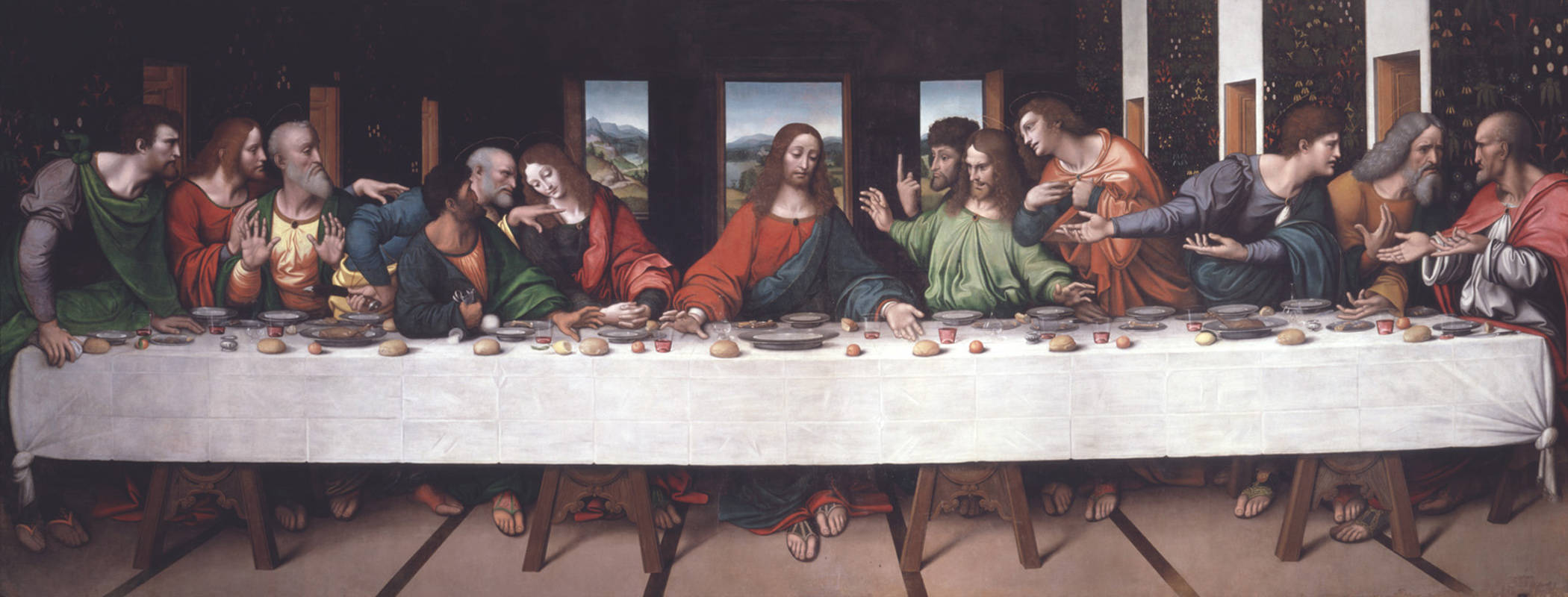
| Giampietrinio - The Last Supper (from wikimedia) |
here are some ideas to maximize your meaning of the sacrament.
"examine yourself" - spend time reviewing the prior week; and how to improve in the coming week (see 1 corinthians 11:28)
find a quiet spot, either saturday evening or sunday morning; and spend a good thirty minutes to an hour in meditation. review your actions and thoughts from the prior week. do not be critical of yourself. rather, simply note how you could have done better in your attitude about your circumstance in life, your interactions with others, and how you used your free will. did you act with reason? did you serve others? how did you practice virtue?
next, coach yourself. envision any circumstances that you will encounter in the coming week and how you can react to them. think of ways to serve others, from small acts of kindness to truly going out of your way to help others.
consider journaling your meditations and review them each week.
think of the savior's sacrifice during the sacrament
pay attention to the words of the hymn.
listen to the words of the prayers.
while in silence, waiting for the bread and water to be passed, read or recite in your mind a chosen scripture or passage. you can even work on memorizing a passage that has meaning for you.
over the years, i've focused on mosiah 14.
study the meaning of a 'broken heart and contrite spirit'
learn what a broken heart and contrite spirit are. you can even start here.
Saturday, May 14, 2016
men's hearts failing them for fear
this last week, a phrase from my patriarchal blessing has been rattling around in my head and i've been thinking about it a lot.
the phrase says, "you will also see wickedness run rampant and hearts that will fail." the concept of failing hearts is what i've been so focused on this week.
i've tried to deconstruct it and wrap my head around this concept.
the concept of failing hearts stems from a verse in the new testament. christ tells his disciples of the signs of his second coming. luke 21:26 reads, "men’s hearts failing them for fear, and for looking after those things which are coming on the earth: for the powers of heaven shall be shaken."
there is also a video entitled "men's hearts shall fail them", in which russell nelson describes a harrowing flight he was on, where the plane briefly caught fire. some passengers were in total panic, while he was perfectly calm and he was ready to "meet his maker." he then reads luke 21:26 and discusses how many today live in fear "because they forget their identity and their purpose." when he says "identity", i believe he is referring to our relationship with god - that we are his children. he then lists several life-challenging circumstances which causes fear or anxiety in people's hearts.
thinking a bit more about both luke 21:26 and the nelson video, i asked myself, "why do people's hearts fail them in those difficult circumstances?" two answers came to my mind, because they put their trust and happiness in something that is out of their control; and, because, for guidance in this life, they relied on their heart rather than reason.
how many people have taken for granted their life's situation - and have thought that they are the author of their privileged circumstances. in reality, we fail to truly appreciate how many things in life are out of our control. and when something unwanted happens (i.e. it is out of our control), we feel fear and anxiety - and our hearts fail us.
examples of these types of circumstances out of our control would be:
- loss of a loved one (to death)
- financial ruin
- degrading health
- natural events
- accidents
truly, we cannot control these types of events. so why do we let our fear and anxiety grip us? why do we let our hearts fail us?
how do we combat this? how can we prevent our hearts from failing us?
the answer lies in not allowing our lives to be lead by our hearts. rather we should should use reason to constantly ask the question whether something is in our control or not. if it is not in our control, then we need to accept our fate, as it were, and try to learn from what life has dealt us.
if we do this, our hearts will not fail us. they will keep on beating. and our minds will be content with what we can do and accomplish. if anything is out of our control, we will accept and even love our fate and exercise our control to understand what it is we must learn from it.
the phrase says, "you will also see wickedness run rampant and hearts that will fail." the concept of failing hearts is what i've been so focused on this week.
i've tried to deconstruct it and wrap my head around this concept.
the concept of failing hearts stems from a verse in the new testament. christ tells his disciples of the signs of his second coming. luke 21:26 reads, "men’s hearts failing them for fear, and for looking after those things which are coming on the earth: for the powers of heaven shall be shaken."
there is also a video entitled "men's hearts shall fail them", in which russell nelson describes a harrowing flight he was on, where the plane briefly caught fire. some passengers were in total panic, while he was perfectly calm and he was ready to "meet his maker." he then reads luke 21:26 and discusses how many today live in fear "because they forget their identity and their purpose." when he says "identity", i believe he is referring to our relationship with god - that we are his children. he then lists several life-challenging circumstances which causes fear or anxiety in people's hearts.
thinking a bit more about both luke 21:26 and the nelson video, i asked myself, "why do people's hearts fail them in those difficult circumstances?" two answers came to my mind, because they put their trust and happiness in something that is out of their control; and, because, for guidance in this life, they relied on their heart rather than reason.
how many people have taken for granted their life's situation - and have thought that they are the author of their privileged circumstances. in reality, we fail to truly appreciate how many things in life are out of our control. and when something unwanted happens (i.e. it is out of our control), we feel fear and anxiety - and our hearts fail us.
examples of these types of circumstances out of our control would be:
- loss of a loved one (to death)
- financial ruin
- degrading health
- natural events
- accidents
truly, we cannot control these types of events. so why do we let our fear and anxiety grip us? why do we let our hearts fail us?
how do we combat this? how can we prevent our hearts from failing us?
the answer lies in not allowing our lives to be lead by our hearts. rather we should should use reason to constantly ask the question whether something is in our control or not. if it is not in our control, then we need to accept our fate, as it were, and try to learn from what life has dealt us.
if we do this, our hearts will not fail us. they will keep on beating. and our minds will be content with what we can do and accomplish. if anything is out of our control, we will accept and even love our fate and exercise our control to understand what it is we must learn from it.
Sunday, October 04, 2015
ponderize selling the good news
on sunday september 27, a new domain was registered at godaddy.com.
the name of the domain: www.ponderize.us
a week later, on sunday october 4, 2015, david g. durrant, 1st counselor of the sunday school general presidency of the church of jesus christ of latter-day saints gave a talk and discussed a curious term: ponderize.
shortly after the talk, people began to shop (at the aforementioned website) for t-shirts and wristbands with "ponderize" written on them as well as "what's your verse?" originally, shirts were selling for $19.99 and wristbands were going for $2.99. later in the day, prices were dropped to $17.99 and $1.99 and a caveat was added: "all profits will be going to the Missionary Fund of the Church."
i sincerely hope this (profitizing general conference talks) does not become a major trend. i have a hunch that this was originally an idea for making money and then when the durrant family received some negative press, they quickly changed strategy from for-profit to all profits going to the missionary fund of the church.
what would jesus say of all this?
No man can serve two masters: for either he will hate the one, and love the other; or else he will hold to the one, and despise the other. Ye cannot serve God and mammon. (matthew 6:24)
OCTOBER 5 UPDATE
The site has been taken down. More info at this news article.
and linked is an official apology from david g. durrant.
the name of the domain: www.ponderize.us
a week later, on sunday october 4, 2015, david g. durrant, 1st counselor of the sunday school general presidency of the church of jesus christ of latter-day saints gave a talk and discussed a curious term: ponderize.
shortly after the talk, people began to shop (at the aforementioned website) for t-shirts and wristbands with "ponderize" written on them as well as "what's your verse?" originally, shirts were selling for $19.99 and wristbands were going for $2.99. later in the day, prices were dropped to $17.99 and $1.99 and a caveat was added: "all profits will be going to the Missionary Fund of the Church."
i sincerely hope this (profitizing general conference talks) does not become a major trend. i have a hunch that this was originally an idea for making money and then when the durrant family received some negative press, they quickly changed strategy from for-profit to all profits going to the missionary fund of the church.
what would jesus say of all this?
No man can serve two masters: for either he will hate the one, and love the other; or else he will hold to the one, and despise the other. Ye cannot serve God and mammon. (matthew 6:24)
OCTOBER 5 UPDATE
The site has been taken down. More info at this news article.
and linked is an official apology from david g. durrant.
Sunday, September 13, 2015
reasons to serve; reasons to keep commandments
taking a cue from elder oaks' talk "why do we serve?" i wanted to apply the same reasons for service to reasons to obey god's commandments.
the main principal behind this talk is found in proverbs 23:7; which states, as a man "thinketh in his heart, so is he." god wants our actions and thoughts to be in harmony. when we are duplicitous, in a sense, our souls are split and harmed. other scriptures to consider are: d&c 64:34, d&c 16:6, mosiah 24:12, alma 18:32, moroni 7:6-7, alma 12:14.
therefore, one of the main challenges in life is to tune our hearts and actions to god's will and commandments.
with that concept in mind, we now can observe the many reasons why people serve and / or keep the commandments.
reason 1: earthly reward
some people will serve or keep the commandments if by so serving or obeying, it will enable them greater wealth in their business or social interactions. a common example of this might be offering to help someone with the intention that that person will return a favor to them (i.e. buy a product or be a patron of the business).
reason 2: personal companionship
this example is often seen in missions. people may join the church or come to church because of the missionaries. but as soon as the missionaries leave, people may stop associating with the church. people may be selective of when to serve or obey based on who their home teachers are or who is in the ward. if the ward members are acceptable, they will serve and attend. but if not, they will not engage. take note, that if all members strive to be kind and loving to everyone, then people may expand their friendships and desire to worship with all members. also note, that christ served with, associated with and loved all people.
reason 3: fear of punishment
the scriptures are full of examples of what happens to those who do not obey or serve. fear certainly motivates, but it does not motivate for the right reasons. fear should never be used to motivate others to do what is right. when fear is used to move others to serve and obey, the person instilling the fear is simply using "unrighteous dominion".
reason 4: sense of duty or loyalty
elder oaks calls people who serve and obey out of a sense of duty or loyalty "good soldiers." without question, they serve and obey. they are all around us. their commitment to their fellow-men is unwavering. there are still higher reasons to serve and obey.
reason 5: eternal reward
those who are 'in it for the long-haul' are those who are keen on achieving eternal life. they will ensure hardships and persecution. they are not easily swayed by temptations or peer pressure. they are committed to god and their fellow-men with the expectation that they will live with god forever.
reason 6: true charity
those who have developed a sense of a true love of god and all men have also developed true charity. these people have developed a love for all; and have developed the ability to see people as god sees them. truly charitable people have become fully committed to god's plan for his children, and they actively participate in helping that plan be realized. as 1 cor 13:1-3 states, we can give our all to the poor, but if we don't do it for the right reasons (charity), "it profiteh ... nothing."
the main principal behind this talk is found in proverbs 23:7; which states, as a man "thinketh in his heart, so is he." god wants our actions and thoughts to be in harmony. when we are duplicitous, in a sense, our souls are split and harmed. other scriptures to consider are: d&c 64:34, d&c 16:6, mosiah 24:12, alma 18:32, moroni 7:6-7, alma 12:14.
therefore, one of the main challenges in life is to tune our hearts and actions to god's will and commandments.
with that concept in mind, we now can observe the many reasons why people serve and / or keep the commandments.
reason 1: earthly reward
some people will serve or keep the commandments if by so serving or obeying, it will enable them greater wealth in their business or social interactions. a common example of this might be offering to help someone with the intention that that person will return a favor to them (i.e. buy a product or be a patron of the business).
reason 2: personal companionship
this example is often seen in missions. people may join the church or come to church because of the missionaries. but as soon as the missionaries leave, people may stop associating with the church. people may be selective of when to serve or obey based on who their home teachers are or who is in the ward. if the ward members are acceptable, they will serve and attend. but if not, they will not engage. take note, that if all members strive to be kind and loving to everyone, then people may expand their friendships and desire to worship with all members. also note, that christ served with, associated with and loved all people.
reason 3: fear of punishment
the scriptures are full of examples of what happens to those who do not obey or serve. fear certainly motivates, but it does not motivate for the right reasons. fear should never be used to motivate others to do what is right. when fear is used to move others to serve and obey, the person instilling the fear is simply using "unrighteous dominion".
reason 4: sense of duty or loyalty
elder oaks calls people who serve and obey out of a sense of duty or loyalty "good soldiers." without question, they serve and obey. they are all around us. their commitment to their fellow-men is unwavering. there are still higher reasons to serve and obey.
reason 5: eternal reward
those who are 'in it for the long-haul' are those who are keen on achieving eternal life. they will ensure hardships and persecution. they are not easily swayed by temptations or peer pressure. they are committed to god and their fellow-men with the expectation that they will live with god forever.
reason 6: true charity
those who have developed a sense of a true love of god and all men have also developed true charity. these people have developed a love for all; and have developed the ability to see people as god sees them. truly charitable people have become fully committed to god's plan for his children, and they actively participate in helping that plan be realized. as 1 cor 13:1-3 states, we can give our all to the poor, but if we don't do it for the right reasons (charity), "it profiteh ... nothing."
Wednesday, December 17, 2014
Silent Night in Kekchi
Lok'-laj k'oj - yin; re cha-bi-lal.
Jun li yaj aj isk quichal
Xco sa' jun tu-la-nil o-choch-nal
Qui-yo'-la jun lix ch'i-na c'u-lahal.
Yo chi-cuarc li Je-sus
Lok'-laj k'oj - yin; re cha-bi-lal.
Que'-ra-bi laj il-ol xul
Nak qui-chal lix cuan-quil li Ka-cua'
Xa-bi-man li bi-chanc sa' cho-xa
Qui-yo'-la li Je-sus,
Qui-yo'-la li Je-sus.
Lok'-laj k'oj - yin; re cha-bi-lal.
Xtau xk'e-hil ka-col-bal
Nak li Dios quix-tak-la li ra-lal
Re tox-tzol ut tox-ra ch tz'a-kal.
A'an li Ka-cua' Je-sus,
A'an li Ka-cua' Je-sus.
Jun li yaj aj isk quichal
Xco sa' jun tu-la-nil o-choch-nal
Qui-yo'-la jun lix ch'i-na c'u-lahal.
Yo chi-cuarc li Je-sus
Lok'-laj k'oj - yin; re cha-bi-lal.
Que'-ra-bi laj il-ol xul
Nak qui-chal lix cuan-quil li Ka-cua'
Xa-bi-man li bi-chanc sa' cho-xa
Qui-yo'-la li Je-sus,
Qui-yo'-la li Je-sus.
Lok'-laj k'oj - yin; re cha-bi-lal.
Xtau xk'e-hil ka-col-bal
Nak li Dios quix-tak-la li ra-lal
Re tox-tzol ut tox-ra ch tz'a-kal.
A'an li Ka-cua' Je-sus,
A'an li Ka-cua' Je-sus.
Sunday, December 14, 2014
El Valor
On December 14, I gave a talk to the Spanish branch.
Buenos dias hermanos
y hermanas. Estoy muy agradecido de
estar aqui con ustedes esta manana.
Me llamo hermano
Putnam. Tengo una esposa que se llama
Jill. Nosotros tenemos cuartro
hijos. La major tiene 14 anos y se llama
Emma. El segundo tiene 12 anos y se
llama Benjamin. El tercero tiene 10 anos
y se llama Erick and la menor tiene 8 anos y se llama Camille.
Hemos vivido in
tejas casi 14 anos. Vivimos en Dallas
por 8 anos. Nos movimos a houston en dos
mil nueve. Y nos gusta mucho vivir aqui
en el area de kingwood y atascocita.
Hay que disculparme
por no hablar muy bien el espanol. Ha
pasado casi 18 anos que he hablado el espanol diariamente. Espero que el espiritu es lo que les ensene
esta manana.
Quiero compartir
algunas cosas de mi. Hize una mision en
guatemala en mil nove cientos noventa y cinco hasta noventa y siete. Estuve en la capital, baja verapaz, alta
verpaz y el peten. Tambien estuve doce
meses en un area que se llama polochic.
Alli, no hay muchos que hablan el espanol. Muchos hablan kekchi; que es un dialecto
maya. Entonces, cuando vivia en
polochic, tenia que aprender el idioma kekchi.
No solo tenia que
aprender el kekchi, pero tambien tenia que aprender comer todos tipos de comida
como cabeza de pavo or chompipe (turkey), lengua de vaca, y pie de pato! Aunque pudo comer estas cosa, la unica comida
que no pudo aguantar fue queso duro.
Hasta hoy mismo, no puedo comer queso duro.
Amo mucho la gente
de guatemala.
En este tiempo del
ano, me acuderdo de las navidades que pase en guatemala. En navidad, la gente hacen tamales de elote
y chocolate caliente; y el chocolate fue recogido del arbol el mismo dia. Todos los miembros se juntaron pata una
fiesta. Cantaron y jugaron. Me da mucho feliz penser en estos recuerdos.
Hoy, quiero hablar
sobre la tema de "el valor o coraje".
El presidente monson ha hablado mucho sobre esta tema. In fact (de hecho?), el ha hablado de esta tema muchas vezes en
conferencia general desde el ano mil novecientos ochenta y seis.
Presidente monson
nos ensena de cuentos en las escrituras de personas que tenian el valor.
Hoy, quiero hablar
de el valor de un hombre de el libro de mormon.
Este hombre tenia mucho valor.
Las decisiones y acciones de este hombre determino el destino de los
nefitas por mas de dos cientos anos.
Este hombre fue el
profeta Abinadi.
Como ya saben,
abinadi fue llamado de dios para profetizar al pueblo de Noe, quien fue el rey
de la tierra. Abinadi mando que la gente
se arrepientiera. En Mosiah capitulo 11,
dice "Y acontecio que habia entre ellos un hombre que se llamaba Abinadi;
y salio entre ellos y empezo a profetizar, diciendo: he aqui, asi dice el
senor, y asi me ha mandado, diciendo; ve y di a esta gente: asi dice el senor:
ay de los de este pueblo! Porque he
visto sus abominaciones and sus iniquidades, y sus fornicaciones, y a menos que
se arrepientan, los visitare con mi ira.
Y a menos que se arrepientan y se vuelvan al senor su dios, he aqui, los
entregare en manos de sus enimigos; si seran reducidos al cautiverio y seran
afligidos por mano de sus enimigos"
Abinadi ensenso y
mando la gente a arrepentirse por un tiempo.
Pero cuando el rey noe mando que Abinadi sea matado; en este momento,
Abinadi se escondio del rey Noe por dos anos.
No sabemos lo que
paso con Abinadi por esos dos anos, pero quizas el se esforsaba a obtener mas
coraje para profetizar al pueblo. En el
capitulo 12 de mosiah, dice "y acontecio que despues de dos anos, abinadi vino
entre ellos disfrazado, de modo que no
lo conocieron." aunque el sabia que
el rey queria que se lo matara, abinadi empezo a profetizar y declalar el
arrepentimiento a la gente.
Ya sabemos lo que
paso con abinadi. Este cuento no termino
con alegria. Daniel, en la biblia, fue
salvado cuando el senor cerro las bocas de los leones. Sadrac, mesac y abed-nego fueron salvados
cuando trataron quemarlos en el fuego.
Pero a abinadi, no fue salvado.
Aunque hizo todo lo que el senor le mando, todavia le quitaron la
vida. Por eso, abinadi tuvo mucho
valor. El sabia que iria matado, y
todovia hizo lo que el senor le mando.
Hacemos, nosotros,
lo que debemos hacer, aunque sabemos las consequencias?
Cuando tenemos una
decision antes de nosotros, debemos recordar las palabras en capitulo 31 de
Deu-ter-ron-omio: "Esforzaros y cobrad animo; no temais ni tengais miedo
de ellos, porque jehova tu dios es el que va contigo."
Mietras estaba
preparando este discurso, encontre un cuento de un misionero que hizo una
mision en guatemala hace cuarenta anos.
Este misionero tuvo mucha fe and valor.
Este misionero se llama elder Ellsworth.
Y cuando el estaba en guatemala, habia un terremoto.
[Él] permaneció
aplastado por una viga por doce horas, tras lo cual se le halló totalmente
paralizado de la cintura para abajo. Los riñones no le funcionaban y no había
esperanzas de que volviera a caminar…
“Se le trasladó de
inmediato a los estados unidos, donde fue entrevistado en el hospital por un
reportero de televisión. Éste le dijo:
“—Los doctores dicen
que no podrá volver a caminar. ¿Qué opina usted, élder Ellsworth?
“El élder respondió:
“—No solamente
volveré a caminar, sino que tengo un llamamiento de un profeta para servir como
misionero en Guatemala, y volveré a Guatemala para finalizar esa misión…
“El élder Ellsworth
hacía el doble de los ejercicios que los médicos le habían prescrito. Ejerció
su fe, recibió una bendición del sacerdocio, y su recuperación fue milagrosa.
Dejó asombrados a los médicos y a los especialistas. Comenzó a ponerse de pie;
más tarde logró caminar con muletas, y luego los doctores le dijeron: ‘Puede
volver al campo misional si la Iglesia así lo permite’. Así regreso nuevamente
a Guatemala. Regresó a la tierra a la cual había sido llamado, al pueblo al que
amaba profundamente.
“Al llegar, caminó,
cumpliendo con sus actividades a la par de cualquier otro misionero, con un
bastón en cada mano. El presidente de la misión le dijo un día:
“—Élder Ellsworth,
con la fe que usted tiene, ¿por qué no tira esos bastones y camina solo?
“Y el élder le
respondió: “—Si usted tiene esa clase de fe en mí, así lo haré.
“Y así fue que soltó
los dos bastones, y nunca tuvo que volver a utilizarlos”
Elder Ellsworth tuvo
mucha fe y valor
Cuando nosotros
tenemos una decision que hacer, y es una
decision muy deficil, debemos recordar el valor de abinadi y al valor de daniel
y el valor de sadrac, mesac y abed-nego y tambien el valor de elder ellsworth.
Yo se que jesu
cristo vive y nos ama. Se que si
guardamos los mandamientos de jesu cristo, el valor dentro de nosotros crecera.
En el nombre de jesu
cristo, amen.
Saturday, November 22, 2014
A Life of Gratitude
A Midsummer's Night Lecture
Let me begin by telling a very bizarre story; I call it "A Midsummer's Night Lecture." I was a teenager; maybe about 14 years old. It was summer. We often went water skiing with our cousins or on a church activity. One night, after returning from one of these trips, my sister and I were dropped off by one of the adult leaders. We walked into our home, my sister then changed clothes and left to go to a friend's home. I stayed home. My dad was sitting in his chair - he called me over proceeded to give me one of the most forceful lectures I've ever received in my life.
He appeared upset that I was not grateful. At the time, and still to this day, I honestly do not know what provoked the lecture. My only theory is that I did not thank the adult leader who dropped us off after the trip and that my sister mentioned this to my dad before she left to go to her friend's home. I didn't argue with my dad; rather, I was utterly surprised and caught off guard.
The point of this bizarre story is this: in my dad's eyes, gratitude was extremely important. So important, that a supposed lack of expressing some gratitude for a car ride prompted him to sternly lecture me that summer night long ago.
The Utility of Gratitude
I'm a big believer in utility. If something in life isn't very useful; then why use it? This life is so full of things and stuff and ideas and philosophies. And since life is so short, I believe we don't have time to deal with things that don't have utility. And so, on the subject of gratitude, I have come to the conclusion that is has significant utility in our lives. I believe gratitude is a type of glue or bond that holds our marriages, families, wards, communities and even holds the world together. Gratitude changes our attitude towards ourselves and others. There have been several studies that have confirmed this. Let me share a few of them.
One study randomly assigned people to three different groups. Each of the three groups would write in a journal once a week for ten weeks. The first group would describe 5 things they were grateful for in the previous week. The second group would record 5 things that displeased them during the previous week and the third group was told to simply write 5 things that affected them and they were not told to focus on either positive or negative things.
I'm sure you won't be surprised, but the group that focused on gratitude for those 10 weeks were 25% happier; had fewer health complaints and even exercised 1.5 hours more than the other groups.
Another study focused on people who wrote about things for which they were grateful every day. In this study, the results were those people offered more emotional support and help for other people with problems. Their goodwill increased.
Other studies have found that those who focus on gratitude have had happier spouses and had less bouts of depression.
One doctor, who has studied marriages for over twenty years, claims that he can can predict, often after only 3 minutes of observation, which marriages will flourish and which will flounder. His success rate is 90% and his secret is this: he counts the ratio of positive expressions (including expressions of gratitude) to negative expressions between the husband and wife. Those who have a 5:1 ratio will flourish.
(source: The Neuroscience of Why Gratitude Makes Us Healthier)
Being Grateful vs. A Life of Gratitude
Perhaps last week or evening during this next week, you or your children have participated or will participate in some activity which asked you to list all your blessings. Perhaps you have made, as my family has done in the past, a Thankful Turkey, where you write about something for which you are grateful on a colorful feather and then glue it on turkey. Perhaps after singing the hymn Count Your Many Blessings, you have sat down and pondered all that you have in this life.
Certainly, we have all been grateful for things at one point in our life. However, the key question is: are we living a life of gratitude? Is there a difference between being grateful and living a life of gratitude? I think activities such as counting our blessings absolutely puts us on the path of living a life of gratitude, but that is only the beginning.
Consider this hypothetical situation. It's Thanksgiving Day in Jerusalem around 601 or 602 BC. Lehi's family sits around the table to have a Thanksgiving feast. Before they begin to eat, Lehi asks everyone around the table to say something for which they are grateful. Lehi and Sariah express gratitude for their family, their home and a loving God. Laman is next; he's grateful for a new goblet and plate. Lemuel is grateful for a new coat. Nephi expresses gratitude for his parents and Sam was grateful for a warm bed to sleep in. Certainly they were all grateful that last Thanksgiving before leaving Jerusalem. Now we'll see who was being grateful and who was living a life of gratitude.
You know this part of the story. They leave their home and flee to the wilderness. Laman and Lemuel complain, whine and demand that they stay in Jerusalem. Once they are sufficiently away from Jerusalem, what is the first thing Lehi does? 1 Nephi 2:7 "And it came to pass the he built an altar of stones, and made an offering unto the Lord, and gave thanks." Lehi then names a river and a valley after Laman and Lemuel, but there is no record of them giving thanks. In fact, they continued to complain. They whined about how Lehi was seeing things and that they had to leave home and all their gold and silver. And they feared they would die in the wilderness. I think it is safe to say Laman and Lemuel felt entitled. They deserved to stay home. They deserved to keep their possessions. They probably gave proof that some of their friends didn't have to leave town. Before storming off, they might have said, "this life is so unfair!".
Then the boys are sent back to retrieve the brass plates. After hearing their father explain why they needed to go back, Laman and Lemuel must have rolled their eyes and said, "Are you kidding me? We just got here and now you want us to go back?!" You know, we laugh at this amusing take on 1st Nephi, but how many of us have said or thought something similar? What is our ratio of expressions of gratitude to complaints?
I could go on with this story of Laman and Lemuel and Nephi. But I'll leave that to you. Maybe sometime this week, sit down, pull up and read 1 Nephi and then think about the different reactions of these brothers. How did they react when they were about to starve to death in the wilderness? How did they react when they found the Liahona? How did they act when they got to Bountiful? And how did they act on the ship? In those chapters are ample evidence of what a life of entitlement looks like contrasted with what a life of gratitude looks like.
How to Live a Life of Gratitude
I hope I've given you some things to think about today. This last part of my talk will focus on what you can do to begin living a life of gratitude.
Ralph Waldo Emmerson said, "cultivate the habit of being grateful for every good thing that comes to you, and to give thanks continuously."
Robert Emmons, who has done extensive research on gratitude said, "life is a series of problems that have to be solved - and a lot of times those problems cause stress. Gratitude can be that stress buster."
WRITE DOWN WHAT YOU ARE THANKFUL FOR IN A JOURNAL (blog, twitter, facebook, instagram). Make it a habit; write five to ten minutes a day, about what you are grateful for.
DON'T AVOID THE NEGATIVE. Embrace setbacks as part of the overall journey. Sometimes, you can even recall a hard time you've experienced and compare it with your current state. You will feel grateful and it may help you accept and deal with current and future challenges in life.
SPEND TIME WITH YOUR LOVED ONES. Gratitude helps us connect with other people. It strengthens relationships
MINDFULLY USE SOCIAL MEDIA Connected to the journal, I suggest leveraging social media to jot down things you are grateful for. Positive thoughts shared on social media spread faster than negative thoughts.
KNOW THE VALUE OF THE LITTLE THINGS A kind word, opening the door for someone, a hug, spending time to listen. All these are little things we can do. And as we do the little things, we are more prone to pay it forward.
VOLUNTEER OR SERVE Acting on those feelings of gratitude will prompt us to serve. Whether we help with a big service project or a small project, our gratitude increases when we serve.
(Source: 7 Habits of Grateful People)
Conclusion
Let me begin to close with this quote you may have heard or read before. It is by Victor Frankl. He survived the Nazi concentration camps. Those prisoners were stripped of everything physically and psychologically. Yet there were some who kept their true freedom.
He said, "We who lived in concentration camps can remember the men who walked through the huts comforting others, giving away their last piece of bread. They may have been few in number, but they offer sufficient proof that everything can be taken from a man but one thing: the last of the human freedoms - to choose one's attitude in any given circumstance, to choose one's own way."
And so it is with us; we must choose to either live of life of entitlement or a life of complaint; or we can choose to live a life full of gratitude to our Heavenly Father and to all around us.
Gratitude, when you truly think about it, is a means to connect with people; as I said earlier, it is a type of social glue or bond. Serving and gratitude go hand in hand. And when we serve and give thanks and when we are served and receive thanks, we are making a connection with others. And as we make those connections in our family and with our friends and in our ward and community, we strengthen the bonds of love. And when we strengthen the bonds of love, we make the world a better place.
I am grateful for my wife Jill. This year has been a huge struggle for me. She has listened to me; she has prayed for me; she has served me. Up until August this year, Jill and I would get up at 4:45 in the morning and go on a 4 mile walk - it took us about an hour to walk that. And we would talk. I loved our walks and talks. She listened to me; I listened to her. We gave each other advice and we sought to understand each other. We have grown so close because of those walks and I can't wait until school gets out next summer so we can continue that tradition every morning. But for now, we find time in the morning before work or at night when the kids are in bed or we go a date and we talk and listen. I have never felt more grateful for anyone than her. I love her and am truly grateful for her.
Brother and sisters - please have gratitude in your hearts. Strive to live a life of gratitude. I know you will he happier and healthier if you do.
In the name of Jesus Christ - amen.
Let me begin by telling a very bizarre story; I call it "A Midsummer's Night Lecture." I was a teenager; maybe about 14 years old. It was summer. We often went water skiing with our cousins or on a church activity. One night, after returning from one of these trips, my sister and I were dropped off by one of the adult leaders. We walked into our home, my sister then changed clothes and left to go to a friend's home. I stayed home. My dad was sitting in his chair - he called me over proceeded to give me one of the most forceful lectures I've ever received in my life.
He appeared upset that I was not grateful. At the time, and still to this day, I honestly do not know what provoked the lecture. My only theory is that I did not thank the adult leader who dropped us off after the trip and that my sister mentioned this to my dad before she left to go to her friend's home. I didn't argue with my dad; rather, I was utterly surprised and caught off guard.
The point of this bizarre story is this: in my dad's eyes, gratitude was extremely important. So important, that a supposed lack of expressing some gratitude for a car ride prompted him to sternly lecture me that summer night long ago.
The Utility of Gratitude
I'm a big believer in utility. If something in life isn't very useful; then why use it? This life is so full of things and stuff and ideas and philosophies. And since life is so short, I believe we don't have time to deal with things that don't have utility. And so, on the subject of gratitude, I have come to the conclusion that is has significant utility in our lives. I believe gratitude is a type of glue or bond that holds our marriages, families, wards, communities and even holds the world together. Gratitude changes our attitude towards ourselves and others. There have been several studies that have confirmed this. Let me share a few of them.
One study randomly assigned people to three different groups. Each of the three groups would write in a journal once a week for ten weeks. The first group would describe 5 things they were grateful for in the previous week. The second group would record 5 things that displeased them during the previous week and the third group was told to simply write 5 things that affected them and they were not told to focus on either positive or negative things.
I'm sure you won't be surprised, but the group that focused on gratitude for those 10 weeks were 25% happier; had fewer health complaints and even exercised 1.5 hours more than the other groups.
Another study focused on people who wrote about things for which they were grateful every day. In this study, the results were those people offered more emotional support and help for other people with problems. Their goodwill increased.
Other studies have found that those who focus on gratitude have had happier spouses and had less bouts of depression.
One doctor, who has studied marriages for over twenty years, claims that he can can predict, often after only 3 minutes of observation, which marriages will flourish and which will flounder. His success rate is 90% and his secret is this: he counts the ratio of positive expressions (including expressions of gratitude) to negative expressions between the husband and wife. Those who have a 5:1 ratio will flourish.
(source: The Neuroscience of Why Gratitude Makes Us Healthier)
Being Grateful vs. A Life of Gratitude
Perhaps last week or evening during this next week, you or your children have participated or will participate in some activity which asked you to list all your blessings. Perhaps you have made, as my family has done in the past, a Thankful Turkey, where you write about something for which you are grateful on a colorful feather and then glue it on turkey. Perhaps after singing the hymn Count Your Many Blessings, you have sat down and pondered all that you have in this life.
Certainly, we have all been grateful for things at one point in our life. However, the key question is: are we living a life of gratitude? Is there a difference between being grateful and living a life of gratitude? I think activities such as counting our blessings absolutely puts us on the path of living a life of gratitude, but that is only the beginning.
Consider this hypothetical situation. It's Thanksgiving Day in Jerusalem around 601 or 602 BC. Lehi's family sits around the table to have a Thanksgiving feast. Before they begin to eat, Lehi asks everyone around the table to say something for which they are grateful. Lehi and Sariah express gratitude for their family, their home and a loving God. Laman is next; he's grateful for a new goblet and plate. Lemuel is grateful for a new coat. Nephi expresses gratitude for his parents and Sam was grateful for a warm bed to sleep in. Certainly they were all grateful that last Thanksgiving before leaving Jerusalem. Now we'll see who was being grateful and who was living a life of gratitude.
You know this part of the story. They leave their home and flee to the wilderness. Laman and Lemuel complain, whine and demand that they stay in Jerusalem. Once they are sufficiently away from Jerusalem, what is the first thing Lehi does? 1 Nephi 2:7 "And it came to pass the he built an altar of stones, and made an offering unto the Lord, and gave thanks." Lehi then names a river and a valley after Laman and Lemuel, but there is no record of them giving thanks. In fact, they continued to complain. They whined about how Lehi was seeing things and that they had to leave home and all their gold and silver. And they feared they would die in the wilderness. I think it is safe to say Laman and Lemuel felt entitled. They deserved to stay home. They deserved to keep their possessions. They probably gave proof that some of their friends didn't have to leave town. Before storming off, they might have said, "this life is so unfair!".
Then the boys are sent back to retrieve the brass plates. After hearing their father explain why they needed to go back, Laman and Lemuel must have rolled their eyes and said, "Are you kidding me? We just got here and now you want us to go back?!" You know, we laugh at this amusing take on 1st Nephi, but how many of us have said or thought something similar? What is our ratio of expressions of gratitude to complaints?
I could go on with this story of Laman and Lemuel and Nephi. But I'll leave that to you. Maybe sometime this week, sit down, pull up and read 1 Nephi and then think about the different reactions of these brothers. How did they react when they were about to starve to death in the wilderness? How did they react when they found the Liahona? How did they act when they got to Bountiful? And how did they act on the ship? In those chapters are ample evidence of what a life of entitlement looks like contrasted with what a life of gratitude looks like.
How to Live a Life of Gratitude
I hope I've given you some things to think about today. This last part of my talk will focus on what you can do to begin living a life of gratitude.
Ralph Waldo Emmerson said, "cultivate the habit of being grateful for every good thing that comes to you, and to give thanks continuously."
Robert Emmons, who has done extensive research on gratitude said, "life is a series of problems that have to be solved - and a lot of times those problems cause stress. Gratitude can be that stress buster."
WRITE DOWN WHAT YOU ARE THANKFUL FOR IN A JOURNAL (blog, twitter, facebook, instagram). Make it a habit; write five to ten minutes a day, about what you are grateful for.
DON'T AVOID THE NEGATIVE. Embrace setbacks as part of the overall journey. Sometimes, you can even recall a hard time you've experienced and compare it with your current state. You will feel grateful and it may help you accept and deal with current and future challenges in life.
SPEND TIME WITH YOUR LOVED ONES. Gratitude helps us connect with other people. It strengthens relationships
MINDFULLY USE SOCIAL MEDIA Connected to the journal, I suggest leveraging social media to jot down things you are grateful for. Positive thoughts shared on social media spread faster than negative thoughts.
KNOW THE VALUE OF THE LITTLE THINGS A kind word, opening the door for someone, a hug, spending time to listen. All these are little things we can do. And as we do the little things, we are more prone to pay it forward.
VOLUNTEER OR SERVE Acting on those feelings of gratitude will prompt us to serve. Whether we help with a big service project or a small project, our gratitude increases when we serve.
(Source: 7 Habits of Grateful People)
Conclusion
Let me begin to close with this quote you may have heard or read before. It is by Victor Frankl. He survived the Nazi concentration camps. Those prisoners were stripped of everything physically and psychologically. Yet there were some who kept their true freedom.
He said, "We who lived in concentration camps can remember the men who walked through the huts comforting others, giving away their last piece of bread. They may have been few in number, but they offer sufficient proof that everything can be taken from a man but one thing: the last of the human freedoms - to choose one's attitude in any given circumstance, to choose one's own way."
And so it is with us; we must choose to either live of life of entitlement or a life of complaint; or we can choose to live a life full of gratitude to our Heavenly Father and to all around us.
Gratitude, when you truly think about it, is a means to connect with people; as I said earlier, it is a type of social glue or bond. Serving and gratitude go hand in hand. And when we serve and give thanks and when we are served and receive thanks, we are making a connection with others. And as we make those connections in our family and with our friends and in our ward and community, we strengthen the bonds of love. And when we strengthen the bonds of love, we make the world a better place.
I am grateful for my wife Jill. This year has been a huge struggle for me. She has listened to me; she has prayed for me; she has served me. Up until August this year, Jill and I would get up at 4:45 in the morning and go on a 4 mile walk - it took us about an hour to walk that. And we would talk. I loved our walks and talks. She listened to me; I listened to her. We gave each other advice and we sought to understand each other. We have grown so close because of those walks and I can't wait until school gets out next summer so we can continue that tradition every morning. But for now, we find time in the morning before work or at night when the kids are in bed or we go a date and we talk and listen. I have never felt more grateful for anyone than her. I love her and am truly grateful for her.
Brother and sisters - please have gratitude in your hearts. Strive to live a life of gratitude. I know you will he happier and healthier if you do.
In the name of Jesus Christ - amen.
Sunday, November 09, 2014
"Like" Stats on Apostles' Talks October 2014
10,000 bednar: come and see
9,700 holland: are we not all beggars?
8,100 uchtdorf: "lord, is it i?" (priesthood)
5,100 oaks: loving others and living with differences
4,700 uchtdorf: receiving a testimony of light and truth
4,100 ballard: stay in the boat and hold on!
4,000 christofferson: free forever, to act for themselves
3,800 uchtdorf: living the gospel joyful (women's meeting)
3,700 scott: make the exercise of faith your first priority
3,500 monson: ponder the path of thy feed
3,400 anderson: joseph smith
2,900 cook: choose wisely (priesthood)
2,800 perry: finding lasting peace and building eternal families
2,700 eyring: continuing revelation
2,400 packer: the reason of our hope
1,900 monson: guided safely home
1,600 nelson: sustaining the prophets
1,600 monson: until we meet again
1,100 eyring: the preparatory priesthood (priesthood)
1,000 monson: welcome to conference
i do this little stat check about a month after general conference. in may, when i reviewed april data, there was no one talk over 8K likes. for the october 2014 conference, there were 3 talks over 8K likes with bednar coming in at 10K likes. last october, both uchtdorf and holland had 12K likes, but they were no where near that this year.
still, holland came in at #2 and all three of uchtdorf's talks were highly liked.
bednar's talk at 10K was surprising.
9,700 holland: are we not all beggars?
8,100 uchtdorf: "lord, is it i?" (priesthood)
5,100 oaks: loving others and living with differences
4,700 uchtdorf: receiving a testimony of light and truth
4,100 ballard: stay in the boat and hold on!
4,000 christofferson: free forever, to act for themselves
3,800 uchtdorf: living the gospel joyful (women's meeting)
3,700 scott: make the exercise of faith your first priority
3,500 monson: ponder the path of thy feed
3,400 anderson: joseph smith
2,900 cook: choose wisely (priesthood)
2,800 perry: finding lasting peace and building eternal families
2,700 eyring: continuing revelation
2,400 packer: the reason of our hope
1,900 monson: guided safely home
1,600 nelson: sustaining the prophets
1,600 monson: until we meet again
1,100 eyring: the preparatory priesthood (priesthood)
1,000 monson: welcome to conference
i do this little stat check about a month after general conference. in may, when i reviewed april data, there was no one talk over 8K likes. for the october 2014 conference, there were 3 talks over 8K likes with bednar coming in at 10K likes. last october, both uchtdorf and holland had 12K likes, but they were no where near that this year.
still, holland came in at #2 and all three of uchtdorf's talks were highly liked.
bednar's talk at 10K was surprising.
Monday, May 26, 2014
Love
Jesus taught, "Ye have heard that it hath been said, Thou shalt love they neighbour, and hate thine enemy. But I say unto you, Love your enemies, bless them that curse you, do good to them that hate you, and pray for them which despitefully use you, and persecute you." (Matthew 5:43-44)
Concerning the two greatest commandments, he taught, "That shalt love the Lord they God with all they heart, and with all thy soul, and with all they mind. This is the first and great commandment. And the second is like unto it, Thou shalt love they neighbour as thyself." (Matthew 22:37-39)
And lastly he taught, "This is my commandment, That ye love one another; as I have loved you. Greater love hath no man than this, that a man lay down his life for his friends." (John 15:12-13)
To summarize, we are to love our enemies like we love our neighbors. We are to love our neighbors as we love ourselves. We are to love ourselves and our neighbors as Jesus loved his disciples and us.
Concerning the two greatest commandments, he taught, "That shalt love the Lord they God with all they heart, and with all thy soul, and with all they mind. This is the first and great commandment. And the second is like unto it, Thou shalt love they neighbour as thyself." (Matthew 22:37-39)
And lastly he taught, "This is my commandment, That ye love one another; as I have loved you. Greater love hath no man than this, that a man lay down his life for his friends." (John 15:12-13)
To summarize, we are to love our enemies like we love our neighbors. We are to love our neighbors as we love ourselves. We are to love ourselves and our neighbors as Jesus loved his disciples and us.
Tuesday, May 13, 2014
"Like" Stats on Apostles' Talks April 2014
7,900+ uchtdorf: grateful in any circumstances
4,400+ holland: the cost and blessings of discipleship
2,900+ oaks: the keys and authority of the priesthood (priesthood)
2,400+ bednar: bear up their burdens with ease
1,700+ anderson: spiritual whirlwinds
1,600+ uchtdorf: are you sleeping through the restoration? (priesthood)
1,600+ monson: be strong and of a good courage (priesthood)
1,600+ monson: love - the essence of the gospel
1,400+ monson: welcome to conference
1,400+ christofferson: the resurrection of jesus christ
996 hales: if ye love me, keep my commandments
952 nelson: let your faith show
899 eyring: the priesthood man (priesthood)
893 packer: the witness
875 cook: roots and branches
847 scott: i have given you an example
790 ballard: following up
531 eyring: a priceless heritage of hope
489 perry: obedience through our faithfulness
90 monson: until we meet again
no surprise again - as uchtdorf and holland took #1 and #2 respectively.
there were no talks that surpassed the 10,000 like mark this time. both october and april 2013 had at least one talk with more than 10K likes.
the other noteworthy item is oaks' talk which came in 3rd. typically priesthood session talks do not crack the top 5, but given this was such a hot, hot topic, it registered pretty high.
4,400+ holland: the cost and blessings of discipleship
2,900+ oaks: the keys and authority of the priesthood (priesthood)
2,400+ bednar: bear up their burdens with ease
1,700+ anderson: spiritual whirlwinds
1,600+ uchtdorf: are you sleeping through the restoration? (priesthood)
1,600+ monson: be strong and of a good courage (priesthood)
1,600+ monson: love - the essence of the gospel
1,400+ monson: welcome to conference
1,400+ christofferson: the resurrection of jesus christ
996 hales: if ye love me, keep my commandments
952 nelson: let your faith show
899 eyring: the priesthood man (priesthood)
893 packer: the witness
875 cook: roots and branches
847 scott: i have given you an example
790 ballard: following up
531 eyring: a priceless heritage of hope
489 perry: obedience through our faithfulness
90 monson: until we meet again
no surprise again - as uchtdorf and holland took #1 and #2 respectively.
there were no talks that surpassed the 10,000 like mark this time. both october and april 2013 had at least one talk with more than 10K likes.
the other noteworthy item is oaks' talk which came in 3rd. typically priesthood session talks do not crack the top 5, but given this was such a hot, hot topic, it registered pretty high.
Subscribe to:
Posts (Atom)